Qualified Leads · October 12, 2026 · GrowthPros
Moving Company Lead Generation Strategies For Growth
Discover proven moving company lead generation strategies: 5-minute follow-up, exclusive leads, and CRM tracking to cut cost per booked job by 56%.
Key Facts
- Moving leads contacted within 5 minutes are 21x more likely to qualify than those contacted after 30 minutes, according to HBR/MIT research.
- Shared marketplace leads close at only ~3% because multiple movers compete for the same prospect, industry analysis shows.
- Exclusive leads convert 2–3x faster than shared leads for companies with a decent follow-up process, according to industry research.
- One mover's conversion rate jumped from 5% to 30–40% after shifting from non-exclusive third-party leads to owned channels, a case study found.
- A well-run follow-up process cut cost per booked job from $600 to $264, a 56% reduction, without changing the lead source.
- Automation lifts lead contact rates from the 35–45% industry average to 65%, per operations research.
- One moving company grew organic traffic 309% over four years, from 21,734 to 89,027 monthly visits, according to an SEO case study.
Why Most Moving Leads Die Before They Convert
The moving industry faces a significant challenge in converting leads into paying customers, with shared marketplace leads closing at only ~3% due to intense competition. According to industry research, most lost leads are not a result of poor generation, but rather a failure to follow through. This means that the issue lies not in the number of leads generated, but in the process of converting them into booked jobs.
A key factor in determining the success of a moving company is the speed at which they respond to leads. Studies have shown that leads contacted within 5 minutes are 21x more likely to be qualified than those contacted after 30 minutes. This highlights the importance of having a fast and efficient follow-up process in place. Companies that respond quickly to leads are more likely to book jobs and increase their revenue.
The cost of acquiring a lead can be significant, with some companies paying up to $600 per booked job. However, by optimizing their lead generation and follow-up process, companies can reduce this cost to as low as $264 per booked job, resulting in a 56% reduction. This can be achieved by prioritizing exclusive leads, which convert at roughly 2-3x the rate of shared leads, and by using automated multi-channel follow-up to quickly respond to leads.
Some key strategies for improving lead conversion rates include:
- Responding to leads within 5 minutes using automated multi-channel follow-up
- Prioritizing exclusive leads over shared marketplace leads
- Tracking every lead by source in a CRM and measuring cost per booked job
By implementing these strategies, moving companies can improve their lead conversion rates and increase their revenue. As experts in the field note, the key to success lies in having a well-run operation with a focus on speed, exclusivity, and tracking. By optimizing their lead generation and follow-up process, companies can stay ahead of the competition and achieve long-term growth and success.
Speed-to-Lead: The 5-Minute Rule That Changes Everything
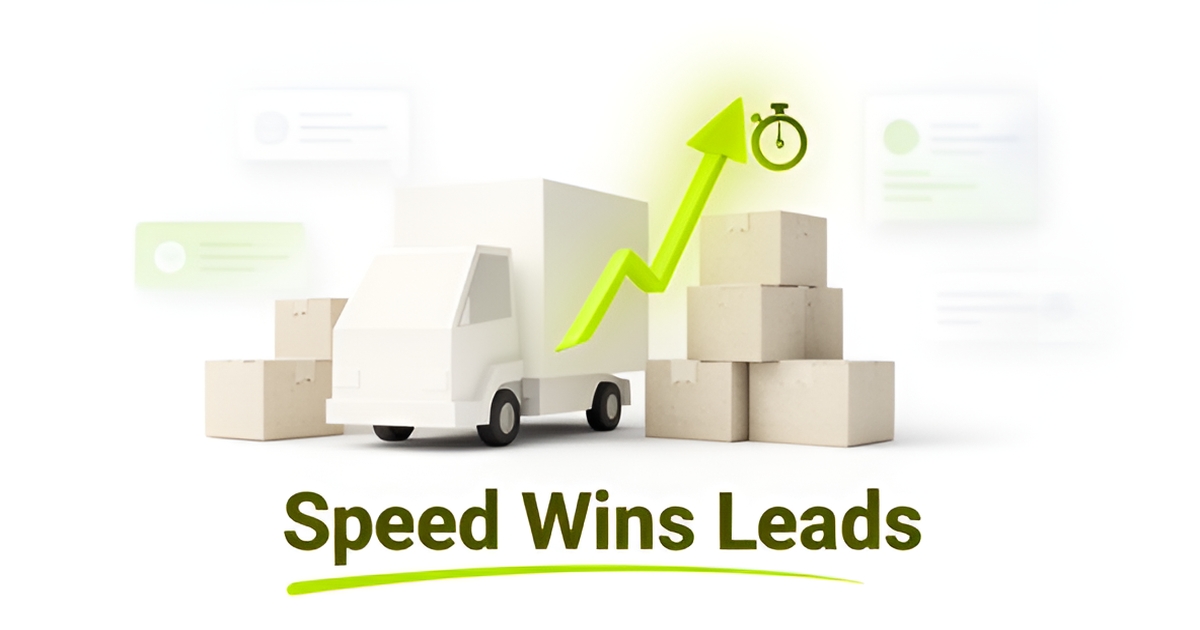
According to industry research, responding to moving leads within five minutes transforms qualification rates, making them 21x more likely to convert than leads contacted after 30 minutes. This urgency is non-negotiable, when a lead arrives at 11pm on Sunday, waiting until Monday risks losing their intent entirely. Studies show that 78% of buyers choose the first business to respond, emphasizing speed as a competitive edge.
Automation is the bridge between urgency and execution. While the industry averages 35–45% contact rates, optimized systems elevate this to 65% by eliminating human delay. This is where GrowthPros’ AI-driven approach excels, ensuring voice, SMS, and email follow-ups occur within minutes, 24/7. By prioritizing speed, moving companies capture high-intent leads before competitors react.
- Leads contacted within 5 minutes are 21x more likely to qualify
- Automation boosts contact rates from 35–45% to 65%
- 78% of buyers select the first responder
GrowthPros’ five-minute AI follow-up window operationalizes this strategy, aligning with the HBR/MIT research that underscores speed as the core driver of conversion. By qualifying leads quickly and pushing them into CRM systems with consent trails, moving companies maximize their chances of securing bookings. This approach turns fleeting interest into actionable opportunities, proving that timing isn’t just a factor, it’s the foundation of success.
Exclusive vs. Shared Leads: The Math Movers Keep Getting Wrong
A $15 lead that books one job for every thirty attempts isn't cheap, it's the most expensive line item in your marketing budget. Yet thousands of moving companies keep buying shared marketplace leads because the sticker price looks friendly.
The numbers tell a different story. Shared marketplace leads close at only about 3% because you're competing against every other mover who bought the same data, while exclusive leads convert 2–3x faster for companies with a decent follow-up process. One mover that shifted from non-exclusive third-party leads to owned, exclusive channels watched conversion jump from 5% to 30–40%, a sixfold improvement from changing where leads come from, not how hard the sales team works.
Not all lead sources are equal. Industry analysis ranks them consistently, and the ordering matters for budget allocation:
- Referrals and organic leads first, referrals close 2–4x faster than bought leads at $25–$75 each, and a past customer sends you the cheapest quality lead you'll ever get.
- PPC for speed, pay-per-click sits at the top of search results almost immediately, making it the bridge while SEO matures over months.
- Marketplace leads last, shared leads sold to multiple movers are best used as off-season gap-fillers, never as a foundation.
Run the math on cost per booked job instead of cost per lead. At a ~3% close rate, a $30 shared lead effectively costs $1,000 per booked move. An $80–$150 exclusive lead closing at 25–35% costs $230–$600 per booking, roughly half to a quarter of the "cheap" option. The sticker price is a trap; the denominator is what matters.
There's a middle path worth knowing. Capped-shared leads, sold to a hard maximum of two buyers, never five like Angi or HomeAdvisor, preserve most of the economics of shared pricing while eliminating the five-way race that crushes marketplace close rates. Providers like GrowthPros structure lead delivery this way precisely because the five-buyer model is what makes marketplace leads unwinnable without inhuman response speed.
The takeaway: measure every channel by cost per booked job, prioritize exclusive and referral flow, and reserve capped-shared volume for the slow season, then follow up within five minutes, every time.
The Leads You Already Paid For: Reactivating Dormant Lists
The cheapest high-quality moving leads often come from past customers, referrals close 2–4x faster at $25–75 each, according to industry research. Yet many movers overlook an equally valuable asset: dormant, opted-in contact lists sitting in their CRMs. These lists, often neglected after initial outreach, hold untapped potential for reactivation through automated, multi-channel sequences.
Re-engaging dormant contacts isn’t just cost-effective, it’s strategically smart. Research shows that speed-to-lead drives conversions, and AI-powered outreach ensures contacts are reached within minutes. SMS, followed by voice and email, creates a layered approach that maximizes visibility without overwhelming prospects. This method typically re-engages 8–15% of dormant contacts, converting them into qualified leads at a fraction of the cost of new acquisitions.
GrowthPros’ dead lead reactivation service leverages this approach, using AI to revive opted-in lists with multi-channel sequences. By prioritizing SMS first, then voice and email, the process aligns with how modern buyers prefer communication. For movers, this means turning previously inactive contacts into warm leads without the expense of sourcing new ones.
- Identify opted-in contacts with historical engagement
- Deploy AI sequences: SMS first, followed by voice and email
- Track re-engagement rates and qualify contacts for the pipeline
The cost savings are significant. Reactivation costs 60–80% less than new-lead acquisition, making it a scalable solution for filling gaps in the sales funnel. For movers with existing CRM data, this strategy transforms passive lists into active opportunities.
< strong class="blog-highlight">Speed and automation remain critical. Leads contacted within five minutes are 21x more likely to qualify, and AI ensures this window is never missed. By reviving dormant contacts, movers can tap into a high-intent audience without the friction of cold outreach.
Revive your dormant contacts with AI-powered sequences, costs 60–80% less than new leads. GrowthPros helps movers turn underutilized data into revenue-driving opportunities.
Build the System: Qualification, Tracking, and Long-Term Channels
Most lost leads aren't a generation problem, they're a follow-through problem, and the difference between a mover that profits and one that bleeds cash comes down to the system behind the leads. Industry analysis is blunt on this point: the companies that book the most moves respond within minutes, qualify before quoting, and track every lead to a closed job.
Score every lead on move date before you quote it. A move date 2–4 weeks out is the strongest high-intent signal a lead can give you, according to lead management guidance for movers. Tier your inbound leads by move date, move type, source, and responsiveness, hot leads get an immediate call and same-day quote, colder leads go into automated follow-up.
Then run a simple five-stage pipeline in your CRM:
- New → Contacted → Quoted → Booked → Lost, nothing more complicated than that.
- Tag every lead with its source so you can see which channels actually produce booked jobs.
- Review lost leads monthly to find follow-through gaps, not just generation gaps.
Measure the right number, too. Cost per lead flatters bad channels; cost per booked job exposes them. One operations breakdown shows a well-run follow-up process cutting cost per booked job from $600 to $264, a 56% reduction, without changing the lead source at all.
Layer long-term foundations underneath your paid channels. Organic and local leads rank highest in quality, and local visibility guidance stresses a fully optimized Google Business Profile with current details and reviews. The payoff is real: one moving company SEO case study documented 309% organic traffic growth over four years, with monthly visits climbing from 21,734 to 89,027.
This is also where a lead partner earns its keep. GrowthPros starts with a 15-minute qualification call to set real numbers for your niche, then delivers qualified, consent-recorded leads directly into your CRM, never dumped into a shared inbox. Every lead carries its consent trail, and AI voice, SMS, and email follow-up runs inside a five-minute window, included with every lead rather than sold as an upsell. Given that contact rates jump from the 35–45% industry average to 65% with automation, the follow-up layer is where the system pays for itself.
Frequently Asked Questions
How fast do I really need to respond to moving leads?
Within 5 minutes. Research shows leads contacted within 5 minutes are 21x more likely to qualify than those contacted after 30 minutes, and 78% of buyers choose the first business to respond. Automation is how you hit that window at 11pm on a Sunday, it can lift contact rates from the 35–45% industry average to 65%.
Are cheap shared marketplace leads actually a good deal?
Usually not. Shared marketplace leads close at only about 3% because you're racing four other movers who bought the same data, so a $30 shared lead effectively costs ~$1,000 per booked job. An $80–$150 exclusive lead closing at 25–35% costs $230–$600 per booking, a quarter to half the 'cheap' option. Use shared leads only as off-season gap-fillers.
Is it better to fix my follow-up process or buy better leads?
Both, but follow-up comes first. Most lost leads are a follow-through problem, not a generation problem, one well-run operation cut cost per booked job from $600 to $264 (a 56% reduction) without changing the lead source at all. That said, shifting from non-exclusive to owned channels lifted one mover's conversion from 5% to 30–40%.
Can I turn my old, dormant leads into new business?
Yes, and it's far cheaper than buying new leads. Reactivating opted-in dormant CRM contacts with a multi-channel AI sequence (SMS first, then voice and email) typically re-engages 8–15% of the list at 60–80% less than new-lead acquisition cost. Referrals and past customers are consistently the cheapest high-quality leads, closing 2–4x faster than bought leads.
Should I measure cost per lead or cost per booked job?
Cost per booked job, always. Cost per lead flatters bad channels, a $15 shared lead at a 3% close rate is really $500+ per booking. Tracking every lead by source in a CRM with a simple pipeline (New → Contacted → Quoted → Booked → Lost) exposes which channels actually produce revenue, and revenue-driven attribution enabled 93% exact click attribution in one case study.
How should I qualify a moving lead before sending a quote?
Score every lead on move date first, a move 2–4 weeks out is the strongest high-intent signal a lead can give. Tier by move date, move type, source, and responsiveness: hot leads get an immediate call and same-day quote, colder leads go into automated follow-up. Companies that respond within minutes and qualify before quoting consistently book the most moves.
Book More Moves Without Buying More Leads
The math in this article points to one uncomfortable truth: most moving companies don't have a lead problem, they have a follow-through problem. Shared marketplace leads close at roughly 3%, while exclusive leads convert 2–3x faster, and a lead contacted within five minutes is 21x more likely to qualify than one left waiting thirty, according to industry research on lead management for movers. Meanwhile, the cheapest high-intent leads are often sitting in your own CRM, costing 60–80% less to reactivate than new acquisitions. Your next steps are simple: audit your cost per booked job (not cost per lead), tier inbound leads by move date, and put automated follow-up in front of every contact. If you'd rather have the system built for you, GrowthPros delivers exclusive and capped-shared moving leads, each qualified, consent-recorded, and followed up by AI voice, SMS, and email inside five minutes, 24/7. Book the free 15-minute qualification call and see what real numbers look like for your service area. No commitment, no invented promises, just the process that books moves.
This article is general information, not legal or financial advice. Benchmark figures are directional industry data, not guarantees of results.