B2B Lead Generation
The Five-Minute Window: Why Lead Response Speed Is Reshaping How US Businesses Buy Prospects
Speed-to-lead, lead exclusivity, and consent documentation are reshaping how US businesses buy prospects. Here's what the numbers say and what to ask any lead vendor.
The Short Version
Speed-to-lead has become the decisive variable in paid lead generation, and buyers are rethinking shared marketplaces in favor of exclusive, consent-recorded leads backed by AI follow-up that fires within minutes.
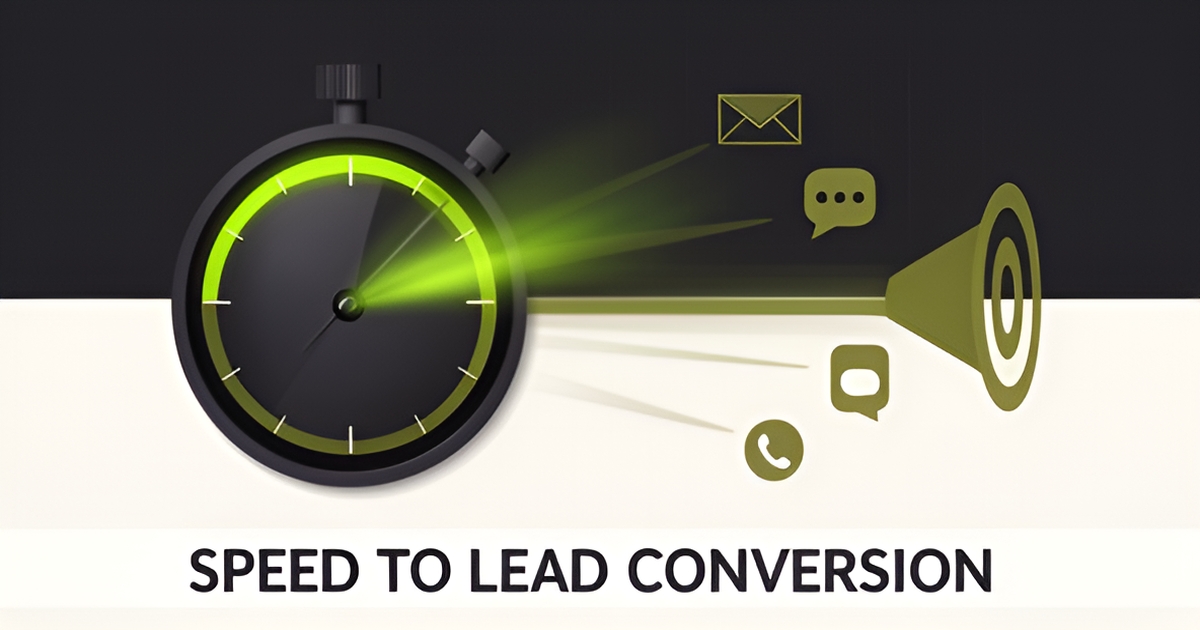
Here's a question worth asking if your business buys leads: what happens to that lead in the first five minutes after it lands? If the answer is "it sits in a shared inbox until someone gets to it," you're likely paying for prospects your competitors will close first. The math on response speed is stark. Industry benchmarks long cited across the sales world suggest that contacting a lead within five minutes makes contact roughly 100 times more likely than responding at the thirty-minute mark, and that about 78% of buyers end up transacting with whoever reaches them first. Those figures are directional rather than laboratory-grade, but the pattern they describe shows up in nearly every sales team's own data: the first responder usually wins. That reality is driving a quiet shift in how US businesses, from auto dealerships to HVAC contractors, evaluate where their leads come from. It's no longer enough to ask how many leads a vendor delivers. The sharper questions are who else got the same lead, how fast follow-up happens, and whether the consent trail will hold up under tightening FCC rules.
The Shared Lead Problem Nobody Priced In
Walk through the economics of a marketplace-style shared lead and the hidden cost becomes obvious. On major home-services and consumer marketplaces, a single lead can be distributed to five or more competing businesses. Every one of those buyers pays for the same prospect, then races to call first. The lead itself might look cheap on an invoice. The effective cost per closed deal tells a different story.
Contrast that with a capped-shared model, where a lead goes to a hard maximum of two buyers, or an exclusive lead that goes to one. Exclusive leads typically run 2 to 4 times the price of a shared lead. That sounds painful until you layer in the closing differential: exclusive leads tend to close 15 to 30% higher, because the prospect isn't fielding four other calls while deciding.
Run a quick example. Suppose a shared home-services lead costs $40 and an exclusive costs $120. If the exclusive closes even twice as often, your cost per booked job drops below the shared option, and you didn't spend your afternoon losing a phone race. Directional cost-per-lead bands back this up: home services generally runs $30 to $150 or more, auto $25 to $60, real estate $100 to $500 or higher, and finance or mortgage $80 to $250. Those ranges vary by niche and market, so treat them as starting points for a pricing conversation, not quotes.
The lesson most buyers eventually learn: cheap per lead and cheap per deal are not the same number.
Why Five Minutes Became the Standard
Consumer behavior explains most of it. When someone fills out a form requesting a quote, their intent is at its peak in the first few minutes. They're often still on the couch, phone in hand, comparing options in other tabs. Five minutes later, they may have already booked with a competitor. Thirty minutes later, they've often forgotten they filled out your form at all.
Traditional sales teams struggle to hit that window consistently. Leads arrive at 9 p.m., on Sundays, during lunch rushes. A human-only follow-up process, however disciplined, has gaps.
This is where AI follow-up has changed the practical calculus. Systems now exist that respond to every inbound lead with voice, SMS, and email inside a five-minute window, around the clock, qualifying intent and booking calls or handing off warm contacts to the sales team. The key structural point: this capability works best when it's built into the lead delivery itself rather than sold as a separate add-on that half the team never turns on. When every delivered lead arrives pre-qualified, time-stamped, and already worked by an AI sequence, the five-minute window stops depending on who's watching the inbox.
If you're evaluating lead vendors, ask one question directly: what happens to my lead in the first five minutes, and is that included in the price?
Your CRM Is Sitting on an Undervalued Asset
There's a second lever that gets far less attention than buying new leads: the leads you already own. Most dealerships, insurance agencies, brokerages, and contractors carry years of dormant contacts in their CRM. Old quotes, unconverted inquiries, lapsed customers. That list cost real money to build, and in most organizations it just sits there.
Reactivation campaigns change that. The mechanics are straightforward: you connect or upload an opted-in list, a multi-channel AI sequence re-engages and qualifies contacts (typically SMS first, voice follow-up, email backup), and re-engaged prospects get pushed back into your CRM for your team to close. Campaigns generally run 30 to 90 days.
The typical re-engagement rate runs 8 to 15% of a dormant database. On a list of 2,000 dormant contacts, that's 160 to 300 conversations you didn't have to buy at market rates. Pricing reflects the efficiency: per qualified reactivation, costs generally run 60 to 80% below the price of a comparable new lead.
Two compliance notes matter here. First, reactivation should only ever target pre-existing, opted-in relationships, never purchased cold lists. Second, lists should be DNC-scrubbed before any outbound contact, with opt-outs honored immediately and permanently across every channel. If a vendor proposes reactivating a list you didn't build with consent, walk away.
Consent Records Are Becoming Part of the Product
The regulatory environment around US lead generation has tightened considerably, and the FCC's one-to-one consent direction is the clearest signal yet that documentation now matters as much as volume. Buyers in auto, insurance, and mortgage have felt this most acutely, since those verticals carry the heaviest TCPA exposure.
The practical implication for lead buyers is simple: ask what consent documentation comes with each lead. A defensible record includes the disclosure text the prospect saw, a timestamp, the IP address of the submission, and the named contacting party. Every lead should carry that trail attached, and every list should be scrubbed against the DNC registry before outbound contact happens.
This is one area where the cheapest lead on the market can be the most expensive mistake you make. A lead without a consent record isn't a bargain; it's a liability with a phone number.
One Pipeline Beats Three Vendors
A common failure mode for growing businesses: one vendor sources leads, another tool handles automated follow-up, a third manages CRM integration, and nobody owns the handoffs between them. Leads fall into the seams.
The alternative is a single pipeline. Fresh leads get sourced by niche, or a dormant list gets run through reactivation. AI follows up within minutes across voice, SMS, and email. Delivery lands directly in the CRM your team already uses, whether that's Salesforce, HubSpot, Follow Up Boss, ServiceTitan, or a webhook or Zapier connection, with a provisioned CRM available the same day if needed. Each lead arrives with its consent trail attached, and funnel submissions get reviewed the same business day.
If you're stitching vendors together today, map what happens to a lead at each handoff. Every seam is a place where minutes, and deals, leak out.
Key Points
- Contacting a lead within five minutes makes contact roughly 100 times more likely than waiting thirty minutes, and about 78% of buyers choose whoever responds first.
- Shared marketplaces can distribute a single lead to five or more buyers; capped-shared models limit distribution to a hard maximum of two.
- Exclusive leads typically cost 2 to 4 times a shared lead but close 15 to 30% higher, changing the real cost-per-deal math.
- Dormant CRM lists are an overlooked pipeline: multi-channel AI reactivation typically re-engages 8 to 15% of an opted-in database at 60 to 80% below new-lead cost.
- FCC one-to-one consent direction is pushing buyers toward leads with documented consent trails, including disclosure text, timestamps, IP addresses, and named contacting parties.
The lead buying market is splitting into two camps. One competes on volume and low per-lead prices, accepts heavy sharing, and leaves the five-minute window to chance. The other competes on outcomes: fewer buyers per lead, AI follow-up inside minutes, documented consent, and a CRM pipeline that doesn't leak. The second camp usually wins on cost per closed deal, even when its invoices look higher. If you buy leads in auto, finance, insurance, real estate, or home services, the fastest way to find out which camp you're effectively in is a short conversation about your niche, your current cost per deal, and whether your dormant CRM list is worth reviving. A 15-minute qualification call costs nothing and commits you to nothing, but it will tell you quickly whether exclusive leads, reactivation, or both make sense for your numbers. You can reach the GrowthPros team at [email protected] or submit the get-started funnel at growthpros.marketing to book that call.