Qualified Leads · October 12, 2026 · GrowthPros
Implant Dentistry And Lasik Lead Generation Techniques
Exclusive implant and LASIK leads convert 25-50% vs 5-15% shared. Learn speed-to-lead tactics, lead grading, and follow-up that books consults. Book a f...
Key Facts
- Exclusive implant leads convert at 25–50%, while shared leads lag at just 5–15% according to lead generation benchmarks.
- Leads not responded to within 10 minutes can lose up to 95% of their value based on MIT’s lead response study.
- Adults aged 65+ are the fastest-growing dental implant segment, accounting for 23% of edentulous individuals as per market analysis.
- Full-arch dental implant cases can generate $60,000–$90,000 per patient according to industry statistics.
- Google Ads clicks for implant queries can cost between $15 and $60 per click based on current market data.
- Retargeting ads within 30–60 days of a website visit significantly boosts conversion rates as noted by implant marketing specialists.
- Clear, educational content outperforms generic promotional copy in converting leads as per latest research.
The High-Stakes Problem: Expensive Leads That Never Become Patients
A single dental implant case can be worth $3,400 to $5,000, and full-arch treatments climb to $60,000–$90,000, yet most practices lose money on the very leads meant to fill those chairs. The economics of elective procedures look irresistible on paper: revenue per patient ranges from $1,500 to $20,000 with gross margins of 40–60%. The problem isn't the math. It's what happens between the lead arriving and the patient booking.
Consider the cost side first. Google Ads clicks for implant queries run $15–$60, and the average cost per qualified implant lead lands between $100 and $350. Full-arch leads cost even more, $150 to $400 per lead through paid channels, according to channel-by-channel benchmarks. At those prices, a practice burning through 20 shared leads a month can easily spend $4,000–$8,000 before scheduling a single consult.
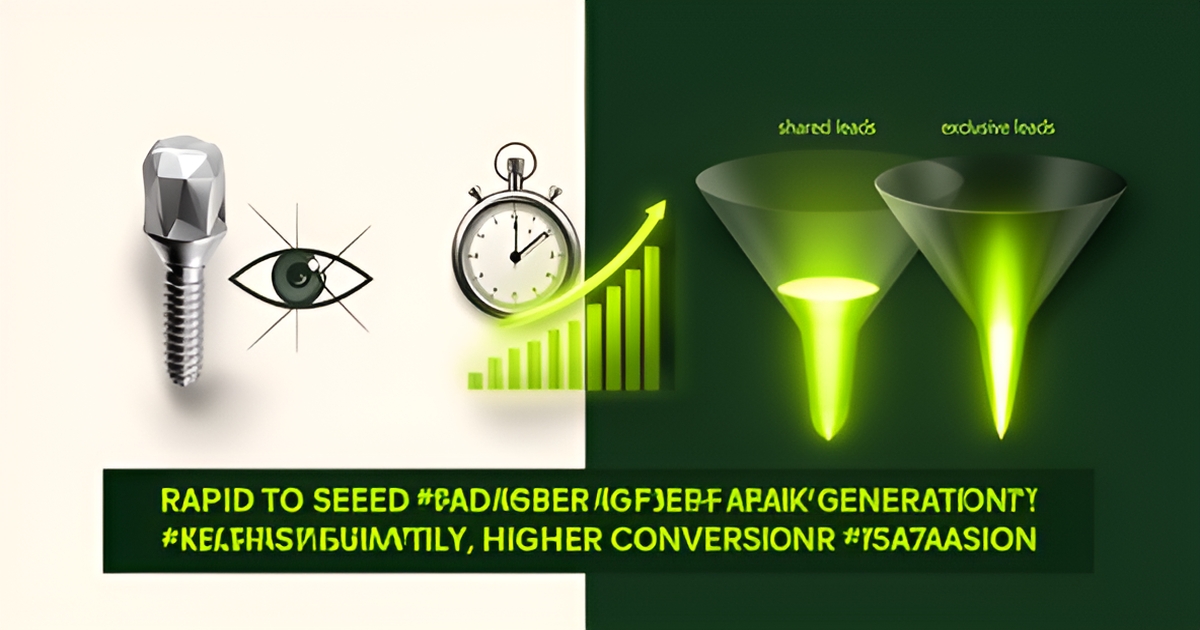
Then the conversion math turns brutal. Shared leads, the kind sold to multiple practices at once, convert at just 5–15%, while exclusive leads convert at 25–50%. That gap is the difference between a profitable pipeline and an expensive hobby. A practice buying cheap shared leads isn't saving money; it's paying five times more per actual patient.
Speed compounds the loss. The widely cited MIT Lead Response Management research shows leads not called within 10 minutes rapidly lose value, the person researching "dental implants near me" this morning is comparing three other providers by lunch. And with well over 500,000 monthly U.S. searches on cost and location terms, per recent implant marketing data, the supply of interested patients isn't the bottleneck.
The real failure points look like this:
- Shared leads competing against four or five other practices calling the same phone number
- Response times measured in hours or days, not minutes, while lead value decays
- No lead grading, so consult-ready patients get the same follow-up as window-shoppers
This is why GrowthPros treats lead quality and speed-to-lead as one problem, not two, every lead is qualified before delivery, and AI voice, SMS, and email follow-up fires inside a five-minute window. The core challenge for implant and LASIK practices isn't generating traffic. It's converting qualified interest into scheduled consultations before that interest goes cold, and before a competitor answers first.
Exclusive Leads and Speed-to-Lead: The Two Levers That Change the Math
Most practices don't lose implant and LASIK patients to better clinicians, they lose them to slower phones and crowded inboxes. The research on implant lead generation points to two variables that matter more than almost anything else you can buy: who else received the lead, and how fast you responded.
Exclusivity changes the conversion math entirely. According to Implant Prospects' benchmarks, exclusive implant leads convert at 25–50%, versus just 5–15% for shared leads. That gap isn't incremental, it's the difference between a lead source that funds your growth and one that quietly drains it.
Shared leads fail for a structural reason. When the same patient inquiry lands in five offices, the winner is whoever calls first, not whoever is best suited. The patient books before your front desk even opens the message. GrowthPros addresses this directly by selling exclusive leads, and its "capped-shared" alternative goes to a hard maximum of two buyers, never the five-way free-for-all typical of shared marketplaces.
Speed-to-lead is the second lever, and it compounds with the first. The MIT Lead Response Management study found that leads not called within 10 minutes rapidly diminish in value, and implant-specific research confirms that a well-structured follow-up sequence with responses inside a five-minute window significantly improves contact rates.
For practices, the practical implications are concrete:
- Buy exclusive whenever the case value justifies it, full-arch implant cases run well into five figures, so a 25–50% conversion rate on an exclusive lead easily outperforms cheap shared volume.
- Respond inside five minutes, every time, including evenings and weekends, when patients researching "dental implants cost" are most likely to submit a form.
- Follow up at least five times before giving up; lead conversion research shows even three calls yields significant improvement.
The hard part is that most practices can't staff a five-minute response window around the clock. GrowthPros builds it into the product instead: every delivered lead, exclusive or capped-shared, receives AI voice, SMS, and email follow-up inside five minutes, 24/7, with each lead qualified, time-stamped, and consent-recorded before delivery.
That combination is what actually moves the numbers. Exclusivity determines your ceiling; speed determines whether you reach it. A shared lead answered in an hour is worth a fraction of its price. An exclusive lead answered in five minutes is the closest thing implant and LASIK marketing has to a reliable bet.
Build a Year-Round Patient Acquisition Engine Around Education
Most practices market in bursts, a campaign here, a seasonal push there, and wonder why their pipeline runs hot and cold. The research is blunt about why that fails: visibility compounds, and switching it off resets the clock.
Patient education beats promotion. According to implant marketing benchmarks, content that explains procedures clearly, gives realistic cost ranges, and answers hesitations honestly consistently outperforms generic "why choose us" copy. This matters because nearly 9 in 10 implant patients research providers online before consulting, revisiting websites several times before booking.
Year-round marketing also compounds mechanically. Rankings, ad quality scores, and review velocity build over weeks and months, assets that decay when spend pauses. Demand peaks in January (insurance and HSA resets) and September–October (year-end FSA and insurance-maximum use), but as one industry analysis puts it, waiting until demand peaks to invest in visibility is one of the most common and costly mistakes in healthcare marketing. Practices that are already ranking when January hits capture the surge; those that start then are 60–120 days behind.
Once education content attracts visitors, demand-side tactics keep them moving:
- Retargeting within 30–60 days of a website visit significantly improves conversion rates, per implant marketing specialists, ideal for high-consideration treatments patients research for weeks.
- Look-alike audiences built from existing patient data use demographic, psychographic, and geographic similarities to find high-potential prospects.
- Clear pricing pages, FAQ schema, and named provider credentials make practices more likely to be cited by AI Overviews and chat-based search, which increasingly answer cost and candidacy questions directly.
That last point deserves emphasis. "Dental implants cost" and "dental implants near me" draw well over 500,000 monthly U.S. searches, and much of that traffic now gets answered by AI before a patient ever clicks. Practices that publish honest pricing ranges and structured FAQ content stay visible inside those answers; those that hide pricing disappear.
The compounding logic applies to lead handling too. Leads not called within 10 minutes rapidly lose value, per the MIT Lead Response Management study, so an education engine that generates demand needs follow-up fast enough to match. GrowthPros pairs every sourced lead with AI voice, SMS, and email follow-up inside a five-minute window precisely because an education strategy without speed-to-lead leaks the demand it creates.
Build the engine once, run it always, and let January and October become harvest seasons rather than panic seasons.
Implementation Roadmap: Channels, Grading, and Follow-Up That Books Consults
Most practices don't lose implant and LASIK patients to better surgeons, they lose them to faster responders and better-graded pipelines. Here's how to build both.
Channel economics first. According to channel benchmarks, Google Ads produces implant leads at $75–$200 for single-tooth cases ($150–$400 for full-arch) with a 25–40% lead-to-consult rate and first leads in 1–5 days. The Google Map Pack costs less ($20–$60 per lead) and converts better (40–60%), but takes 60–90 days to mature. Organic SEO runs $30–$80 per lead at 35–50% conversion, over 60–120 days. Meta sits in between at $40–$120. The right mix depends on whether you need consults this month or a compounding asset, and year-round marketing beats seasonal bursts because rankings, quality scores, and review velocity compound.
Grade every lead A/B/C by treatment readiness. A leads, consult-ready, typically run 30–45% of volume, B leads 30–40%, and C leads 20–30%. Route A leads to your front desk immediately; nurture B and C with education content, which outperforms promotional copy because patients compare providers and revisit websites multiple times before booking.
Design forms that qualify, not just capture:
- Limit forms to 6 questions, friction kills completion
- Lead with Procedures/Symptoms, not Name/Phone/Email
- Ask "Best Time to Reach You" to enable fast, well-timed contact
Then follow up relentlessly. Lead management research shows leads not called within 10 minutes rapidly lose value, and leads should receive at least 5 contact attempts before you stop, even 3 calls yields significant conversion improvement. A practical cadence: instant automated response, call one within minutes, SMS at one hour, call two next day, email with pricing and FAQ content on day three.
This is where a leads-as-product model changes the math. GrowthPros delivers qualified, time-stamped leads, exclusive or capped at two buyers, never dumped into a shared inbox, each with a consent trail attached, landing directly in your CRM via native integration or webhook. Every lead gets AI voice, SMS, and email follow-up inside a five-minute window, 24/7, included rather than upsold. The result: your team talks only to consult-ready people, and the speed-to-lead gap that quietly kills most pipelines closes itself.
From Lead to Consulted Patient: Your Next Step
Converting leads into patients is a crucial step in the implant dentistry and LASIK industries, where exclusive leads convert at 25–50% vs. 5–15% for shared leads. A lead is not a patient; it is a phone number, and the speed of follow-up is decisive - leads not called within 10 minutes quickly diminish in value. In fact, contacting a lead within five minutes makes contact roughly 100x more likely than at thirty minutes.
The cost of slow follow-up can be substantial, particularly for five-figure cases like full-arch dental implants. Full-arch cases carry five-figure values, justifying premium lead costs of $150–$400. To maximize conversion rates, practices should prioritize exclusive leads, respond promptly, and invest in patient-education content.
Some key strategies for converting leads into patients include:
- Prioritizing exclusive leads over shared leads to increase conversion rates
- Responding to leads within minutes, not hours, to maximize contact rates
- Investing in patient-education content to build trust and establish authority
By implementing these strategies, practices can improve their lead-to-patient conversion rates and drive revenue growth. Speed-to-lead is a critical factor in this process, and practices that respond quickly to leads are more likely to secure consultations and ultimately, patients.
To get started, practices can book a free 15-minute qualification call with GrowthPros to discuss their lead generation and conversion strategies. This call can help practices identify areas for improvement and develop a plan to increase their lead-to-patient conversion rates. By leveraging exclusive leads and AI-powered follow-up, practices can stay ahead of the competition and drive growth in their business.
Frequently Asked Questions
Are exclusive dental implant leads really worth the extra cost?
Yes, the math strongly favors exclusivity. Exclusive implant leads convert at 25–50% versus just 5–15% for shared leads sold to multiple practices, so a practice buying cheap shared leads often pays far more per actual patient.
How fast should my practice respond to an implant lead?
Within minutes. Research shows leads not called within 10 minutes rapidly lose value, and following up within five minutes significantly improves contact rates, the patient researching "dental implants near me" is comparing other providers by lunchtime.
How much does a qualified dental implant lead cost?
It depends on the channel and case type. Average cost per qualified implant lead runs $100–$350, with full-arch leads costing $150–$400 through paid channels, a price justified by five-figure full-arch case values.
How many times should I follow up with a lead before giving up?
At least five contact attempts. Lead conversion research shows even three calls yields significant conversion improvement, and a practical cadence might be an instant automated response, a call within minutes, SMS at one hour, a call the next day, and an email on day three.
Should I market dental implants year-round or just during busy seasons?
Year-round. Rankings, ad quality scores, and review velocity compound over weeks and months, and waiting until demand peaks to invest in visibility is one of the most costly mistakes in healthcare marketing, practices that start in January are 60–120 days behind.
What kind of content actually converts implant patients?
Patient education, not promotion. Content that explains procedures clearly, gives realistic cost ranges, and answers hesitations honestly consistently outperforms generic "why choose us" copy, important because nearly 9 in 10 implant patients research providers online and revisit websites several times before booking.
The Five-Minute Difference Between a Patient and a Lost Lead
The math in implant and LASIK marketing is unforgiving: shared leads converting at 5–15% while exclusive leads convert at 25–50%, and every minute past the ten-minute mark quietly erodes the value of a lead that may have cost $150–$400. The practices that win aren't necessarily the best clinicians, they're the ones who control exclusivity, respond in minutes instead of hours, and keep an education-driven pipeline running year-round so January and October become harvest seasons rather than panic seasons. Audit your current lead sources first: are they exclusive or shared, and how fast does follow-up actually happen? Then grade every lead by treatment readiness so consult-ready patients never wait behind window-shoppers. If staffing a five-minute, 24/7 response window isn't realistic in-house, GrowthPros delivers exclusive, consent-recorded leads with AI voice, SMS, and email follow-up built in, leads as a product, not a promise. Book a free 15-minute qualification call to see whether exclusive leads or reactivating your dormant CRM list is the faster path to fuller chairs. No commitment, just an honest look at the numbers.
This article is general information, not legal or financial advice. Benchmark figures are directional industry data, not guarantees of results.