CRM Integration Options · October 12, 2026 · GrowthPros
Collision Repair CRM Features That Drive Sales
Drive sales with collision repair CRM features: speed-to-lead automation, 24/7 follow-up, and efficient lead management. Maximize conversions today.
Key Facts
- Contacting a lead within five minutes makes contact roughly 100x more likely than waiting thirty minutes, according to speed-to-lead research.
- About 78% of buyers choose whichever business responds first, speed-to-lead data shows.
- The collision repair management software market is projected to reach $11.83B by 2034 at a 7.76% CAGR, per SPER Market Research.
- Alternative sizing puts the market at $9.6B in 2025, growing to $22.5B by 2034 at a 10.0% CAGR, OG Analysis reports.
- DMS, inventory, and payment processor integrations became standard in collision repair software during 2024, market analysis notes.
- Estimating software only captures jobs written up, a CRM also captures unapproved estimates and photo requests, where most lost work sits, according to HeyLead.
- Insurer claim system integration reduces processing times and speeds approvals, Verified Market Reports finds.
The Hidden Cost of Slow Lead Response
Every night, collision shops lose repair jobs they never knew they had. A driver uploads damage photos at 9 PM, waits for a reply, and by morning has already booked with whichever shop texted back first.
Speed decides many collision jobs. Industry analysis of body shop CRM integration notes that when a reply waits until the estimator arrives the next morning, a competitor with a text-back has already booked the car in. The same research identifies out-of-hours photo requests as a key lead-loss point, since most shops let them sit unseen until the next business day.
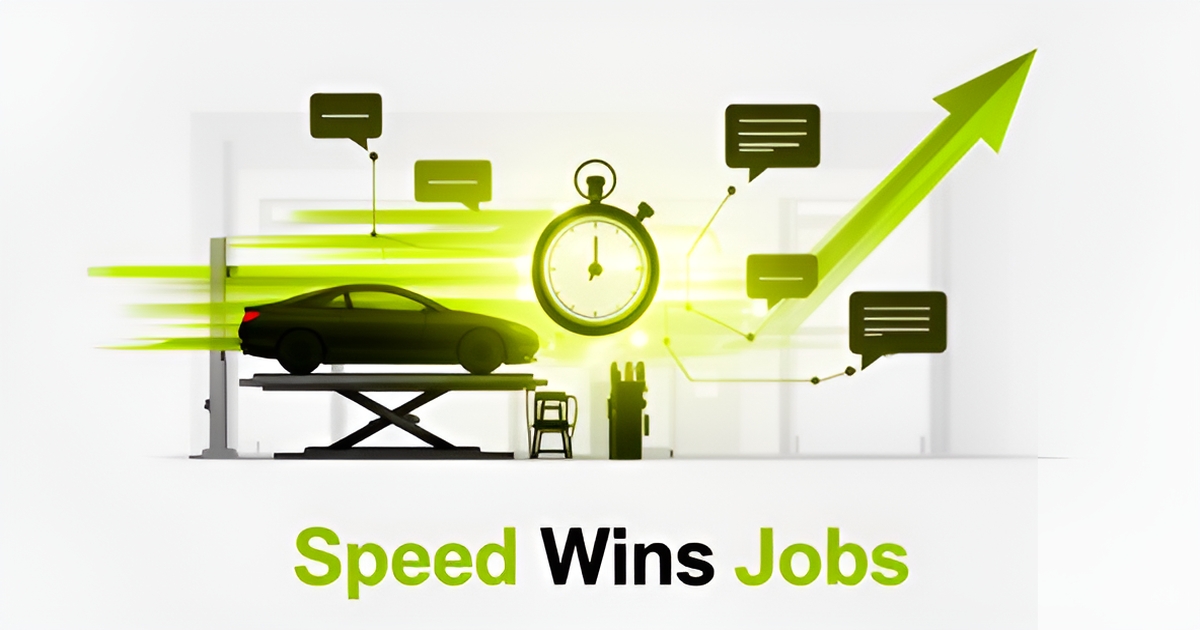
The numbers behind this are stark. According to speed-to-lead research, contacting a lead within five minutes makes contact roughly 100x more likely than waiting thirty minutes, and about 78% of buyers choose whoever responds first. Speed compounds: the gap between a five-minute reply and a thirty-minute reply isn't a small edge, it's the difference between a conversation and a dead lead.
There's also a visibility problem. Estimating software only knows about the jobs written up. A CRM-focused analysis of body shops points out that a CRM also captures the photo requests that never became estimates and the estimates never approved, and for body shops, "that is where most lost work sits." If those inquiries aren't logged, timed, and answered, the shop can't even measure what it's losing.
The most common slow-response patterns include:
- After-hours photo requests sitting in an inbox until the estimator clocks in the next morning
- Unanswered requests with no escalation rule, so nobody is alerted when the first responder misses them
- Stale estimates left on a list with no day-two or day-three follow-up, while customers wait on insurers or decisions about the excess
- No reporting on time-to-first-reply, so slow response never appears as a number anyone owns
This is where CRM integration options matter as much as features. A lead that lands in the system your team actually works in, whether that's a native CRM, a webhook into an existing platform, or a connected inbox, gets answered. A lead that lands in a shared inbox or an unmonitored form does not. GrowthPros builds its delivery model around this reality: every lead gets AI voice, SMS, and email follow-up inside a five-minute window, 24/7, precisely because the first reply wins the booking.
The fix isn't more staff answering phones at midnight. It's automated first-touch coverage, escalation rules that alert a second person when a request goes unanswered, and reporting that measures time-to-first-reply by lead source. Shops that close the after-hours gap stop donating jobs to whoever replies faster.
CRM Features That Convert Leads into Sales
A driver uploading damage photos at 9 PM usually books with whichever shop replies first. If that request sits unseen until your estimator arrives next morning, a competitor with a text-back has already won the job, which is why the CRM features below matter more than most shops realize.
Speed-to-lead is the single biggest conversion lever. Most out-of-hours photo requests go unread until the next morning, a key lead-loss point for body shops. Automated after-hours response, text-back, AI voice, or SMS, ensures no inquiry waits overnight, and every reply gets logged with its source and conversation history.
Lead routing and source tracking turn scattered inquiries into manageable pipeline. A capable CRM captures leads from every channel, photo form, call, text, walk-in, tow driver, insurer assignment, fleet email, and tags each one by source. It also holds the jobs estimating software never sees: the photo requests that never became estimates and the estimates never approved. That's where most lost work sits.
Automated estimate follow-up quietly recovers revenue. Many quotes go cold because the customer is waiting on an insurer or a decision about the excess. A polite follow-up on day two or three, offering to help with the next step, often turns a cold estimate into a booked car. Escalation rules help too, unanswered requests alert a second person, and stale estimates appear on a daily action list.
Integration is no longer optional. DMS, inventory, and payment processor integrations became standard in 2024, and CRM software that connects directly with insurer claim systems reduces processing times and speeds approvals, a direct path to faster bookings and transparent billing.
Post-delivery engagement is where one repair becomes a relationship. Review requests, paint-match checks, and follow-up notes target repeat cosmetic work from past customers. Keep status updates separate from promotions, and secure separate opt-in consent for marketing messages.
When evaluating a CRM, prioritize:
- Automated after-hours reply so no photo request waits until morning
- Lead source tracking across every inbound channel, with time-to-first-reply reporting
- Stalled-estimate follow-up and escalation rules for unanswered requests
- Insurer, DMS, and payment integrations built in
- Post-delivery sequences that drive reviews and repeat work
The same speed principle applies to purchased leads, not just organic inquiries. GrowthPros delivers leads with AI voice, SMS, and email follow-up inside a five-minute window, 24/7, because contacting a lead within five minutes makes contact roughly 100x more likely than at thirty minutes, and about 78% of buyers choose whoever responds first. Whether leads come from your website, an insurer assignment, or a paid source, the CRM that answers fastest wins the car.
Implementing Smart CRM for Collision Repair
Implementing a smart CRM system is crucial for collision repair shops to drive sales and stay competitive. According to industry research, the collision repair management software market is expected to reach $11.83B by 2034 at a 7.76% CAGR. To capitalize on this growth, shops should prioritize speed-to-lead and after-hours coverage in their CRM setup.
A key aspect of an effective CRM system is the ability to track every lead source and capture unconverted demand. This includes retaining photo requests that never became estimates and estimates never approved, with source and conversation history. As noted by HeyLead, "that is where most lost work sits" for body shops. By building reporting on time-to-first-reply, approvals, and deliveries by lead source, shops can gain valuable insights into their sales process.
To get the most out of their CRM system, collision repair shops should consider the following features:
- Automated estimate follow-up and status updates to cut inbound calls and build trust
- Integration with insurer systems, DMS, and payment tools to reduce processing times and speed approvals
- Cloud-based deployment for lower upfront costs and mobile access, particularly for small/mid-sized shops
By implementing these features, shops can improve their sales process and drive revenue growth. As Verified Market Reports notes, digital transformation is driven by needs for customer transparency, reduced manual errors, and accelerated repair cycles.
In addition to these features, shops should also focus on post-delivery engagement to drive repeat revenue. This can include review requests, paint-match checks, and follow-up notes to turn one repair into a relationship. By leveraging their CRM system to build strong customer relationships, collision repair shops can increase customer loyalty and drive long-term growth. With the right CRM system in place, shops like those working with GrowthPros can optimize their sales process and stay ahead of the competition.
Frequently Asked Questions
How quickly should I respond to leads to increase my chances of booking a job?
Responding to leads within five minutes makes contact roughly 100x more likely than waiting thirty minutes, and about 78% of buyers choose whoever responds first, according to speed-to-lead research.
What is the most common reason for losing potential customers in the collision repair industry?
The most common reason is slow response to leads, particularly out-of-hours photo requests that sit unseen until the next morning, giving competitors a chance to respond first and book the job, as noted by HeyLead.
How can I ensure that my collision repair shop is capturing all potential leads and converting them into sales?
Implementing a CRM system with automated after-hours response, lead routing, and source tracking can help capture all potential leads and convert them into sales, as research suggests.
What role does integration with insurer systems play in the collision repair industry?
Integration with insurer systems reduces processing times and speeds approvals, enabling transparent billing and faster bookings, as Verified Market Reports notes.
How can post-delivery engagement help drive repeat revenue for collision repair shops?
Post-delivery engagement, such as review requests, paint-match checks, and follow-up notes, can help turn one repair into a relationship and drive repeat revenue, as HeyLead suggests.
What is the projected growth of the collision repair management software market?
The collision repair management software market is expected to reach $11.83B by 2034 at a 7.76% CAGR, according to SPER Market Research.
The Shop That Replies First, Wins
Every collision job you're losing right now leaves a quiet trail: the 9 PM photo request nobody saw, the estimate that went cold on day three, the lead source you never measured. The fix isn't hiring someone to answer phones at midnight, it's a CRM built around speed-to-lead, after-hours automation, source tracking that captures the work your estimating software never sees, and follow-up sequences that turn stalled quotes into booked cars. Contacting a lead within five minutes makes contact roughly 100x more likely than waiting thirty minutes, and about 78% of buyers choose whoever responds first. Start by auditing your own numbers: measure time-to-first-reply by lead source this week, then close the biggest gap first. If you'd rather not rebuild that machinery alone, GrowthPros delivers qualified, consent-recorded leads with AI voice, SMS, and email follow-up inside a five-minute window, 24/7, landing directly in the CRM your team already works in. Book a free 15-minute qualification call to see real numbers for your niche. No commitment, no inflated promises, just the process that makes sure the first reply is yours.
This article is general information, not legal or financial advice. Benchmark figures are directional industry data, not guarantees of results.